Every commercial truck rolling through Covington on I-75 or across the Brent Spence Bridge operates under a strict set of federal rules that most passenger car drivers never think about. Those rules limit how long a trucker may drive, how often brakes must be inspected, and how cargo must be loaded.
When a trucking company or its driver ignores those regulations and a rear-end collision occurs, the violation itself may become one of the strongest pieces of evidence in your injury claim. Federal trucking regulations tied to a rear-end accident in Covington, Kentucky may reshape how a jury views fault and how much compensation you recover.
Key Takeaways About Federal Trucking Regulations and Rear-End Accidents in Covington, Kentucky
- The FMCSA sets strict limits on driving hours, brake maintenance, and cargo securement, and violations of these rules frequently contribute to rear-end truck crashes on Kentucky highways.
- A trucking company's failure to comply with federal safety regulations may serve as strong evidence of negligence in a personal injury claim filed in Covington or anywhere in Kentucky.
- Kentucky's negligence per se statute, KRS 446.070, applies to violations of Kentucky state statutes, while federal FMCSA violations may support a common law negligence claim by showing a breach of the standard of care.
- Electronic logging devices, maintenance records, and driver qualification files are the primary tools an attorney uses to prove that a trucking company or driver broke federal rules before a rear-end collision.
- The two-year statute of limitations under KRS 304.39-230 governs motor vehicle accident injury claims in Kentucky, making early action on your case a priority.
What Do FMCSA Hours of Service Violations Have to Do With Rear-End Truck Crashes?
Driver fatigue ranks among the leading contributors to rear-end truck collisions. A tired driver reacts more slowly, misjudges distances, and may fail to notice stopped or slowing traffic on I-75 or I-275. The Federal Motor Carrier Safety Administration (FMCSA) addresses this risk through hours of service regulations that limit how long a truck driver may operate a commercial vehicle.
The Core Hours of Service Limits
The FMCSA hours of service rules for property-carrying drivers set specific boundaries on driving and on-duty time. The primary limits include:

- An 11-hour maximum driving limit after 10 consecutive hours off duty
- A 14-hour on-duty window that starts when the driver begins any work-related activity
- A mandatory 30-minute break after 8 cumulative hours of driving
- A weekly cap of 60 hours over 7 consecutive days or 70 hours over 8 consecutive days
- A 34-hour restart period before beginning a new weekly cycle
When a truck driver exceeds any of these limits and rear-ends another vehicle, the hours of service violation may become an important piece of evidence in the injury claim.
Courts still require proof that the violation contributed to the crash, but exceeding federally mandated rest limits directly supports an argument that the driver was too fatigued to operate the truck safely.
How ELD Data Proves Hours of Service Violations
Federal law requires most commercial truck drivers to use electronic logging devices that automatically record driving time, on-duty status, and rest periods. ELD data is difficult to falsify and provides a minute-by-minute record of the driver's activity leading up to a crash. When that data shows the driver exceeded the 11-hour limit or skipped a mandatory break before the collision, it directly supports a negligence claim.
How Do Brake Maintenance Violations Contribute to Rear-End Truck Accidents?
A commercial truck's braking system is the last line of defense against a rear-end collision. Federal regulations under 49 CFR Part 396 require trucking companies to inspect, maintain, and repair their vehicles to keep them in safe operating condition. When a carrier neglects these obligations, the result may be a truck that physically cannot stop in time.
Federal Brake Inspection and Maintenance Standards
The FMCSA imposes several layers of brake-related requirements on trucking companies and their drivers. The most relevant regulations for rear-end crash cases include:
- Drivers must complete a written vehicle inspection report at the end of each day's work under 49 CFR 396.11, covering brake components among other safety items.
- Trucking companies must perform a comprehensive annual inspection of every commercial vehicle under 49 CFR 396.17, which includes a full brake system evaluation.
- Only qualified brake inspectors who meet the training and experience standards under 49 CFR 396.25 may perform brake maintenance or repairs.
- Carriers must retain annual inspection records for at least 14 months and brake inspector qualification records for the duration of employment plus one year.
A trucking company that skips an annual inspection, assigns brake work to an unqualified mechanic, or ignores a driver's report of brake problems has breached its federal duty. If that breach contributed to a rear-end collision, the maintenance failure may support an injury claim under Kentucky law.
Warning Signs of Brake Neglect in Trucking Operations
Certain patterns in a trucking company's records may point to systemic brake maintenance failures. Red flags that an attorney may look for include:
- Repeated driver complaints about brake performance with no documented follow-up repairs
- Gaps or missing entries in annual inspection records
- Brake work performed by individuals who lack the qualifications required under 49 CFR 396.25
- A history of out-of-service orders issued during roadside inspections by state or federal officers
These patterns help establish that the carrier's negligence was not a one-time oversight but a recurring failure to meet federal safety standards.
What Role Do Driver Qualification Violations Play in a Rear-End Truck Crash?
The FMCSA requires trucking companies to verify that every driver meets minimum qualification standards before putting them behind the wheel. These requirements appear in 49 CFR Part 391 and cover medical fitness, driving history, and licensing.
How Negligent Hiring Connects to Federal Trucking Regulations
A trucking company that hires a driver without checking the required background records may face liability for any accident that driver causes. The federal driver qualification file must include:
- A motor vehicle record from every state where the driver held a license during the prior three years
- A road test certificate or equivalent documentation
- A valid medical examiner's certificate showing the driver meets physical fitness standards
- A written record of any prior alcohol or controlled substance violations
- Employment history covering the prior 10 years for drivers of commercial vehicles
When a company hires a driver with a history of traffic violations, suspended licenses, or failed drug tests, and that driver later causes a rear-end crash on a Northern Kentucky highway, the failure to follow federal qualification standards becomes strong evidence of negligent hiring.
How Do FMCSA Violations Serve as Evidence of Negligence in Kentucky?
A violation of federal trucking regulations does not automatically make the trucking company or driver liable in a Kentucky courtroom, but it may serve as strong evidence that the defendant breached the applicable standard of care. Kentucky courts analyze negligence claims by asking whether the defendant acted as a reasonably prudent person or company would have acted under the same circumstances.
The Relationship Between Federal Violations and Kentucky Negligence Law
Kentucky's negligence per se statute, KRS 446.070, allows a person injured by the violation of a statute to recover damages from the violator. Kentucky courts have interpreted this statute to apply primarily to violations of Kentucky state laws rather than federal regulations.
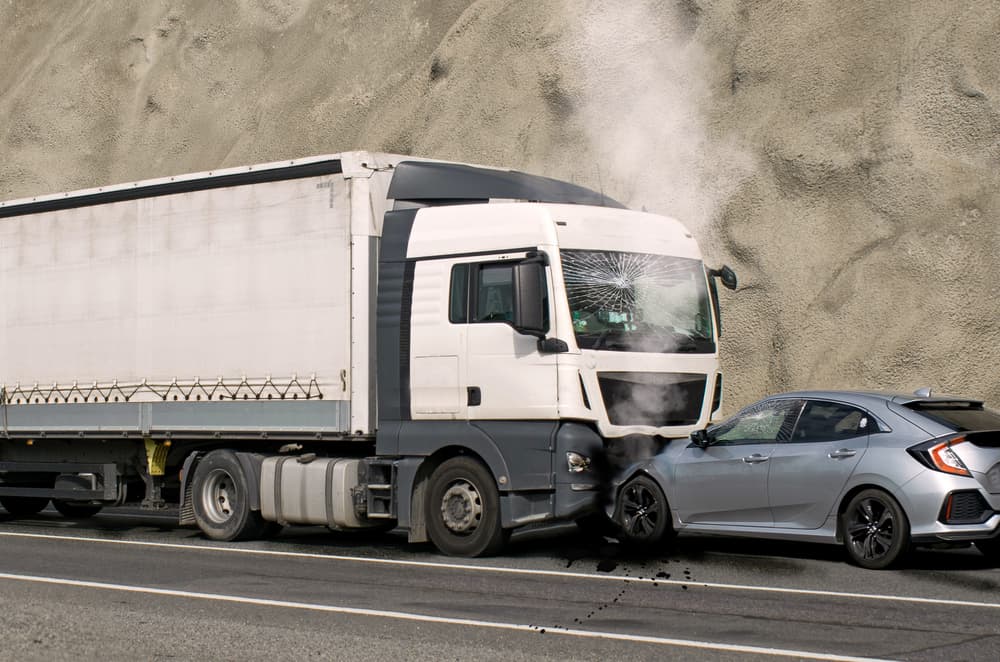
However, a federal FMCSA violation still carries significant weight in a negligence case because it demonstrates that the defendant failed to meet a safety standard that federal regulators created to protect the public.
In practice, your attorney may present evidence of an hours of service violation, a brake maintenance failure, or a driver qualification lapse to show the jury that the trucking company or driver fell below the standard of care. The federal regulation itself defines what a reasonably safe trucking operation looks like, and falling short of that standard supports a finding of negligence.
Why This Distinction Matters for Your Case
Even though FMCSA violations may not trigger Kentucky's negligence per se statute directly, they still function as persuasive evidence that a jury may rely on when assigning fault. Pairing FMCSA violation evidence with Kentucky's pure comparative negligence rule under KRS 411.182 allows your attorney to build a case that assigns maximum fault to the defendants and protects your share of the recovery. The stronger the regulatory violation evidence, the harder it becomes for the defense to shift blame onto you.
How O'Connor, Acciani & Levy Builds Rear-End Truck Accident Claims Using Federal Violations
Truck accident cases often involve complex federal compliance records that require specific knowledge to obtain and interpret. O'Connor, Acciani & Levy has represented injury victims throughout Northern Kentucky and the Cincinnati tri-state region for more than 27 years, and the firm's attorneys have helped recover tens of millions of dollars for injured clients involved in truck collisions and other negligence-based claims.
How the Firm Obtains Trucking Company Records
The firm reviews federally required trucking compliance records, including ELD data, hours of service logs, driver qualification files, drug and alcohol testing histories, brake inspection reports, and dispatch communications. Trucking companies must retain certain records for limited periods under federal regulations, so the legal team moves quickly to send preservation demands before anything disappears.
No Upfront Cost to Get Started
O'Connor, Acciani & Levy handles rear-end truck accident cases on a contingency fee basis. You pay nothing unless the firm recovers compensation for you. The Covington office at 1032 Madison Ave, Suite 103, offers free case evaluations to residents throughout Kenton County and Northern Kentucky.
FAQs for Federal Trucking Regulations and Rear-End Accidents in Covington, Kentucky
What federal regulations apply to truck drivers involved in rear-end crashes?
The primary regulations come from the FMCSA and include hours of service limits under 49 CFR Part 395, vehicle inspection and maintenance standards under 49 CFR Part 396, cargo securement rules under 49 CFR Part 393, and driver qualification requirements under 49 CFR Part 391. Violations of any of these rules may serve as evidence of negligence.
How do hours of service violations cause a rear-end crash in Covington?
When a truck driver exceeds the 11-hour driving limit or skips a mandatory rest break, fatigue impairs reaction time and judgment. A fatigued driver may fail to notice slowed or stopped traffic and rear-end the vehicle ahead. ELD records typically reveal whether the driver exceeded federal driving limits before the crash.
Does a company face liability if its driver violated FMCSA regulations and caused a truck accident in Kentucky?
A trucking company may face liability through the respondeat superior doctrine if its driver caused the crash while performing job duties. The company may also face direct liability for negligent hiring, failure to monitor hours of service compliance, or neglecting vehicle maintenance and brake inspections.
What is negligence per se and does it apply to FMCSA violations in Kentucky?
Negligence per se occurs when a defendant violates a safety law and that violation causes an injury. Kentucky's negligence per se statute under KRS 446.070 applies primarily to violations of Kentucky state statutes. Federal FMCSA violations may not trigger negligence per se directly, but they still serve as strong evidence of negligence by showing the defendant failed to meet an established safety standard.
How long do I have to file a rear-end truck accident claim in Covington?
Under KRS 304.39-230, you have two years from the date of the accident or the date of your last PIP insurance payment, whichever is later. Because trucking companies are only required to retain certain records for limited periods, starting the claims process early helps preserve the evidence your attorney needs.
Protect Your Claim by Acting on Federal Trucking Regulation Violations in Covington, Kentucky

The records that prove a trucking company broke federal safety rules do not last forever. ELD data may be overwritten, maintenance logs may go missing, and driver qualification files may be purged once the retention period expires. Every day that passes without a formal preservation demand is a day that relevant evidence may disappear.
O'Connor, Acciani & Levy has the resources and the local presence in Covington to move quickly on your behalf, identify federal regulatory violations, obtain the records that prove them, and build a negligence case rooted in the trucking company's own compliance failures.
Contact the firm for a free consultation about trucking company compliance and personal injury claims in Kentucky to take the first step toward protecting your rights after a rear-end truck accident in Northern Kentucky.
