Negligent drivers are a leading cause of traffic intersection accidents. Common behaviors such as running red lights, failing to yield, speeding, or driving while distracted or impaired often lead to dangerous collisions. These accidents can result in serious injuries, including whiplash, broken bones, head trauma, internal injuries, and soft tissue damage. Even minor collisions can cause lasting physical and emotional effects, affecting a victim’s ability to work, care for themselves, or maintain daily routines.
Proving fault and recovering compensation in intersection accident cases can be a complex process. Evidence must be gathered and preserved, including police reports, photographs, videos, witness statements, and medical records. Insurance companies often try to minimize payouts, making it difficult for victims to secure fair compensation on their own.
The experienced Covington car accident lawyer at O’Connor, Acciani & Levy can handle every step of your claim or lawsuit for you. We will collect and organize all necessary evidence, communicate with insurance companies, and pursue settlement negotiations or litigation on your behalf. From filing the claim to representing you in court if needed, we work to pursue compensation for your losses, allowing you to focus on recovery without the stress of navigating the legal process alone.
For a free case evaluation and legal consultation, please call our office headquarters at (513) 224-5461 or contact us online right away.
Key Takeaways: Intersection Collisions and Resulting Injuries
• Negligent Drivers Cause Intersection Accidents: Most intersection crashes are caused by drivers running red lights, failing to yield, speeding, and distracted or impaired driving. These actions put everyone on the road at risk.
• Common Injuries: Victims may suffer whiplash, broken bones, head or traumatic brain injuries, internal injuries, soft tissue damage, and emotional trauma. Even minor accidents can have lasting effects on daily life, work, and personal well-being.
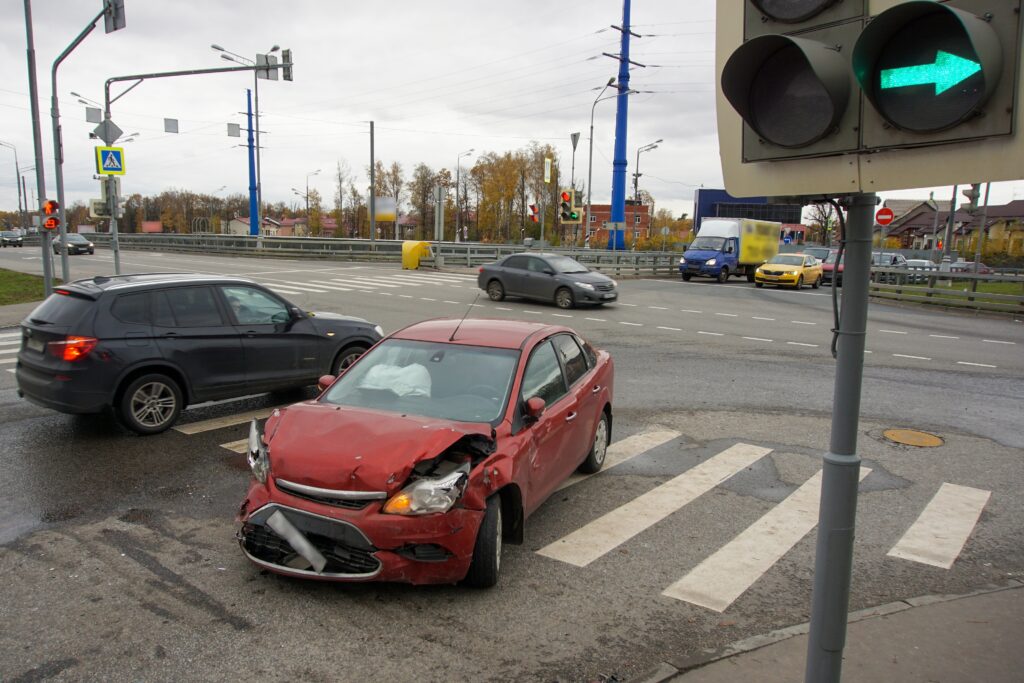
• Types of Evidence Matter: Strong cases rely on police reports, photographs, and videos of the scene, witness statements, medical records, and expert analysis. Proper evidence collection is essential for proving liability and supporting compensation claims.
• Resolution Options: Intersection accident cases can be resolved through negotiated settlements, mediation, arbitration, or litigation. Each method offers different advantages in terms of speed, cost, and finality.
• Compensation: Victims may recover medical expenses, lost income, property damage, pain and suffering, and other related costs.
• How Our Lawyers Can Help: Our experienced attorneys handle every step of your claim or lawsuit, from gathering evidence and negotiating with insurance companies to representing you in court. We work to maximize your compensation and guide you through the legal process from start to finish, allowing you to focus on recovery.
How Do Negligent Drivers Cause Intersection Crashes?
Running Red Lights
One of the most frequent causes of intersection accidents is drivers running red lights. When a driver fails to stop at a traffic signal, it often results in T-bone collisions, which are particularly dangerous. These accidents typically occur at busy intersections where cross traffic is moving at high speeds. Running red lights can be caused by distraction, impatience, or impaired driving, and even a momentary lapse in judgment can have serious consequences.
Failing to Yield
Negligent drivers frequently fail to yield the right-of-way at intersections. This violation can occur when making left turns, entering from a side street, or merging lanes. A driver who does not yield may collide with another vehicle traveling through the intersection, often causing severe side-impact crashes. In many cases, the driver at fault may have been rushing, distracted, or unfamiliar with traffic laws.
Speeding
Excessive speed is another leading factor in intersection accidents. Drivers who approach intersections too quickly have less time to react to traffic signals, pedestrians, or other vehicles on the road. Speeding reduces the driver’s ability to stop safely, increasing the likelihood of collisions. The combination of high speed and failure to obey traffic signals often leads to serious injuries.
Distracted Driving
Modern distractions, such as texting, phone calls, and in-car entertainment systems, significantly increase the risk of intersection crashes. Drivers who look away from the road for even a few seconds may miss a stop sign, a red light, or another vehicle. Distraction can prevent a driver from properly judging gaps in traffic, leading to collisions that could have been easily avoided.
Impaired Driving
Driving under the influence of alcohol or drugs is a common cause of intersection accidents. Impairment slows reaction times, reduces judgment, and increases risk-taking behavior. Even minor impairment can lead to a driver misjudging traffic signals or failing to notice other vehicles, creating dangerous situations at intersections.
What Are the Most Common Types of Injuries in an Intersection Traffic Accident?
Whiplash and Neck Injuries
Whiplash is one of the most common injuries sustained in intersection accidents. It occurs when the head and neck are suddenly jerked forward and backward during a collision. Victims often experience stiffness, pain, and a limited range of motion. In severe cases, whiplash can lead to long-term complications, including chronic pain and headaches.
Head and Traumatic Brain Injuries
Collisions at intersections frequently result in head injuries. Even when occupants wear seatbelts, the force of impact can cause concussions or more serious traumatic brain injuries (TBIs). These injuries may result in confusion, memory loss, dizziness, or long-term cognitive impairment. Victims may require extended medical care, including neurological evaluations and rehabilitation.
Broken Bones and Fractures
Intersection crashes often involve high-impact collisions that can easily break bones. Common fractures include those to the arms, legs, ribs, and collarbone. Depending on the severity, victims may need surgery, immobilization, and months of physical therapy to regain strength and mobility.
Internal Injuries
The force of an intersection accident can also cause internal injuries, such as organ damage or internal bleeding. These injuries may not be immediately apparent but can be life-threatening if left untreated. Victims often require emergency surgery and careful monitoring to prevent complications.
Soft Tissue Injuries
Muscle strains, ligament tears, and other soft tissue injuries are common in intersection accidents. These injuries can cause ongoing pain, swelling, and limited movement. Even minor soft tissue damage may require physical therapy to restore full function.
Emotional and Psychological Trauma
Beyond physical harm, victims of intersection accidents may experience emotional and psychological effects, such as anxiety, depression, or post-traumatic stress disorder (PTSD). These impacts can interfere with daily life, work, and personal relationships, often requiring counseling or therapy to manage.
Most Important Types of Evidence in an Intersection Accident Case
Police Reports
Police reports are often the cornerstone of proving an intersection traffic accident case. When officers arrive at the scene, they document important details, including the location of the collision, statements from drivers and witnesses, and any traffic citations issued. These reports provide an official and impartial account of the accident, helping to establish fault and supporting claims with factual evidence that insurance companies or courts often rely on.
Photographs and Videos
Photographs and videos can be crucial in demonstrating how the accident occurred. Photos of vehicle damage, skid marks, traffic signals, and roadway conditions help reconstruct the scene. Video evidence, such as footage from traffic cameras, dashcams, or nearby businesses, can capture the moments leading up to and during the collision. These visuals often provide clear evidence of negligence, such as a driver running a red light or failing to yield.
Witness Statements
Eyewitness accounts can provide valuable insight into the crash. People who saw the collision can describe the actions of each driver, the speeds of the vehicles, and the timing of traffic signals. Statements from witnesses who are not connected to either party are especially persuasive because they are considered unbiased. Collecting and preserving witness contact information immediately after the accident is critical.
Medical Records
Medical records are essential for proving the extent of injuries sustained in the accident. Detailed documentation from emergency rooms, hospitals, or doctors shows the nature of the injuries, the required treatments, and the impact on the victim’s daily life. These records can directly link the injuries to the collision, helping to establish both liability and damages.
Expert Analysis
Experts such as accident reconstruction specialists can provide professional opinions on how the crash occurred. They analyze vehicle positions, skid marks, and impact patterns to determine speed, point of collision, and fault. Their testimony can clarify complex aspects of the accident that may not be immediately obvious to a judge or jury.
How to Resolve an Intersection Accident Case
Negotiated Settlement
The most common way to resolve an intersection accident case is through a negotiated settlement. After filing a claim – usually with the at-fault driver’s insurance company – the injured party’s attorney can negotiate compensation for medical bills, lost income, property damage, and pain and suffering. Settlements often occur before any formal legal proceedings and can provide a faster resolution without the time and expense of a trial. Insurance adjusters typically review evidence such as police reports, medical records, and photographs before making an offer.
Mediation
Mediation is a form of alternative dispute resolution that allows both parties to work with a neutral mediator. The mediator does not make a binding decision but helps the parties communicate and reach a mutually acceptable agreement. Mediation can be voluntary or court-ordered and is often less formal and costly than litigation. This process provides a structured environment for resolving disputes while avoiding the uncertainty of a trial.
Arbitration
Arbitration is another method to resolve a case outside of court. A neutral arbitrator reviews evidence and hears testimony from both sides before issuing a decision, which can be binding or non-binding depending on the agreement. Arbitration is generally faster and more flexible than a full trial, allowing parties to present documentation, witness statements, and expert analysis. The arbitrator then determines the appropriate amount of compensation for injuries and damages.
Litigation
If other methods are unsuccessful, the case may proceed to court. Filing a civil lawsuit involves submitting a complaint, conducting discovery, presenting evidence, and, if necessary, going to trial. Litigation can take longer and be more expensive than other options, but it allows a judge or jury to make a final determination regarding liability and compensation. Courts follow established procedures for handling traffic accident claims, and the process ensures that all evidence is formally evaluated before a judgment is reached.
How Much Money is an Intersection Accident Claim or Lawsuit Worth?
The value of an intersection accident claim or lawsuit depends on several factors. Insurance companies and courts consider the severity of injuries, the extent of property damage, the impact on the victim’s daily life, and whether medical treatment will be ongoing. Other factors include the clarity of liability, the quality of evidence, and the victim’s ability to document financial losses. Cases with serious injuries or permanent disabilities typically result in higher settlements or awards than minor accidents with minimal damage.
- Medical Expenses – Compensation for medical expenses is one of the most common elements of a claim. It includes hospital bills, doctor visits, physical therapy, prescription medications, and any future medical care related to the accident. Keeping detailed records of all medical treatment is essential, as these documents form the basis for proving the costs associated with the injury.
- Lost Income and Lost Earning Capacity – Victims may also receive compensation for lost income if injuries prevent them from working. If the injuries have long-term effects that limit the victim’s ability to earn a similar income in the future, the claim can include lost earning capacity. Documentation from employers, pay stubs, and tax records can support these claims.
- Pain and Suffering – Claims can also include compensation for physical pain and emotional suffering caused by the accident. It may cover stress, anxiety, depression, and decreased quality of life. Pain and suffering awards are often based on the severity of the injury and the duration of the recovery period.
FAQs: Traffic Intersection Accidents and Injuries
What types of injuries are common in intersection accidents?
Victims often suffer whiplash, broken bones, head or traumatic brain injuries, internal injuries, and soft tissue damage. Emotional and psychological trauma, such as anxiety or stress, can also result from these collisions.
What types of evidence are important in proving a case?
Helpful evidence includes police reports, photographs, and videos of the scene, witness statements, medical records, and expert analysis, such as accident reconstruction. Collecting and preserving this evidence strengthens your claim.
How can an intersection accident case be resolved?
Cases may be resolved through negotiated settlements, mediation, arbitration, or litigation. Settlements and alternative dispute resolution methods can provide faster outcomes, while litigation allows a court to make a final determination on compensation.
What types of compensation can I receive?
You may be eligible for medical expenses, lost income, property damage, pain and suffering, and other related costs.
How can our lawyers help?
The experienced attorneys at O’Connor, Acciani & Levy handle every aspect of your case, from gathering evidence and negotiating with insurance companies to representing you in court. We work to maximize the compensation you deserve while guiding you through the legal process with confidence and clarity.
Consult an Experienced Traffic Intersection Accident Lawyer Today
At O’Connor, Acciani & Levy, our Covington personal injury lawyer team handles every step of your intersection accident claim or lawsuit so you can focus on recovering fully from your injuries.
For a free case evaluation and legal consultation with a knowledgeable intersection accident attorney, please call our office headquarters at (513) 224-5461 or contact us online.
