Rear-end collisions involving semi-trucks are far more dangerous than typical car accidents. A passenger vehicle usually weighs around 4,000 pounds, while a fully loaded tractor-trailer can weigh up to 80,000 pounds. When a truck fails to stop in time and crashes into a smaller vehicle, the difference in size and momentum can cause devastating injuries for the occupants of the car.
This risk is particularly relevant in Cincinnati, where major freight corridors like I-71, I-75, and I-74 carry heavy commercial traffic through a dense urban highway system. Congestion, merging traffic, and sudden slowdowns increase the likelihood of serious rear-end truck collisions.
Rear-end truck accident injuries in Cincinnati, Ohio often involve traumatic brain injuries, spinal damage, and other long-term medical complications. Understanding why these crashes cause such serious harm can help injured drivers and passengers make informed decisions about medical care, insurance claims, and possible legal action.
Key Takeaways About Rear-End Truck Accident Injuries in Cincinnati, Ohio
- The weight difference between a commercial truck and a passenger car creates impact forces that far exceed what the human body and standard vehicle safety systems are designed to handle.
- Underride collisions, where a smaller car slides beneath the rear or side of a truck's trailer, rank among the most lethal types of rear-end truck crashes and may occur even at moderate speeds.
- Catastrophic injuries from semi-truck rear-end collisions in Ohio often require long-term medical care, rehabilitation, and ongoing treatment that standard insurance settlements rarely cover in full.
- Ohio follows a modified comparative negligence rule under Ohio Revised Code § 2315.33, which bars recovery if your fault exceeds 50 percent, making the severity and documentation of your injuries a central part of your claim.
- The two-year statute of limitations under Ohio Revised Code § 2305.10 applies to personal injury claims in Ohio, but building a strong case around catastrophic injuries requires early action.
What Makes a Semi-Truck Rear-End Collision More Dangerous Than a Car Accident?
The difference between getting rear-ended by a sedan and getting rear-ended by a tractor-trailer is not just a matter of degree. The physics, the crash dynamics, and the resulting injuries belong to entirely different categories.
Cincinnati's highway layout amplifies this risk because I-75 and I-71 carry dense commercial traffic through areas where congestion, construction zones, and merging lanes create frequent slowdowns.
The Physics of an 80,000-Pound Impact
Force equals mass multiplied by acceleration. A fully loaded commercial truck traveling at 60 miles per hour generates roughly 20 times more kinetic energy than a 4,000-pound passenger car at the same speed. When that truck strikes the rear of a stopped or slow-moving vehicle, the energy transfers almost entirely into the smaller car and its occupants.
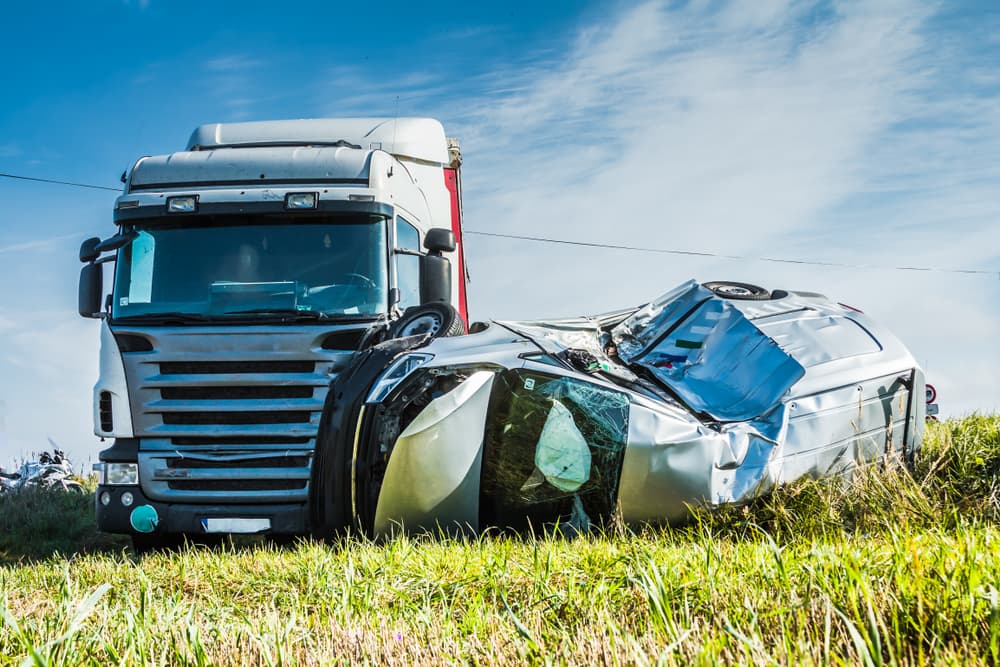
Standard crumple zones, seatbelts, and airbags are designed to absorb forces from collisions between similarly sized vehicles. They are not engineered to withstand the energy that an 80,000-pound truck delivers.
Stopping Distance and Reaction Time
A commercial truck traveling at highway speed may need 500 feet or more to come to a complete stop, depending on the load weight, road conditions, and brake condition. A passenger car under the same conditions typically stops in roughly 300 feet.
That gap means a truck driver who encounters slowed traffic on I-75 near the Norwood Lateral or the I-71/I-75 split has far less margin for error than a car driver in the same situation. When fatigue, distraction, or brake failure narrows that margin further, a rear-end collision becomes nearly unavoidable.
What Types of Injuries Result From Rear-End Truck Crashes in Cincinnati?
The severity of injuries from a semi-truck rear-end collision in Ohio often dwarfs what victims experience in standard rear-end car accidents. The force involved affects the spine, brain, internal organs, and skeletal structure in ways that may require months or years of treatment.
Catastrophic and Life-Altering Injuries
Victims of rear-end truck crashes on Cincinnati's highways commonly suffer injuries that permanently change how they live and work. The most frequently reported injuries from these collisions include:
- Traumatic brain injuries ranging from concussions to severe diffuse axonal injuries that impair cognitive function permanently
- Spinal cord damage that may result in partial or complete paralysis below the point of injury
- Herniated, bulging, or fractured vertebral discs that cause chronic pain and may require surgical fusion
- Internal organ damage from blunt force trauma, including injuries to the spleen, liver, kidneys, and lungs
- Crush injuries to the chest, pelvis, and lower extremities when the vehicle's passenger compartment collapses
Each of these injuries carries its own trajectory of treatment, recovery, and long-term limitation. A traumatic brain injury, for example, may require years of cognitive rehabilitation, while a spinal cord injury might mean lifelong dependence on mobility aids and personal care assistance.
Whiplash and Soft Tissue Injuries
Not every rear-end truck accident results in catastrophic harm, but even lower-speed impacts from a commercial vehicle produce more force than a typical fender bender. Whiplash occurs when the head and neck snap forward and backward violently during a rear-end impact.
When a heavy truck causes that motion, the resulting soft tissue damage to the neck, shoulders, and upper back may be significantly more severe than in a car-on-car collision. Some whiplash victims experience chronic pain, limited range of motion, and recurring headaches that persist for months or longer.
How Do Underride Crashes Make Rear-End Truck Accidents in Cincinnati Even More Dangerous?
An underride collision occurs when a smaller vehicle slides beneath the rear or side of a truck's trailer during a crash. These are among the most dangerous types of rear-end truck accidents because the trailer strikes the passenger compartment at windshield or roof height, bypassing the vehicle's structural safety features entirely.
Why Underride Guards Do Not Always Prevent Catastrophic Harm
Federal law requires most trailers to have rear underride guards, which are metal bars mounted at the back of the trailer designed to stop a car from sliding underneath. The National Highway Traffic Safety Administration (NHTSA) sets standards for these guards under 49 CFR Part 393.86. However, many underride guards in use today may not withstand the forces generated in a moderate-to-high-speed rear-end collision.
Guards that are poorly maintained, rusted, or installed incorrectly may collapse on impact. When the guard fails, the car slides under the trailer, and the results are often fatal or permanently disabling.
Factors That Increase Underride Risk on Cincinnati Highways
Certain road conditions and traffic patterns on Cincinnati's highway system create elevated underride risk. Situations that increase the likelihood of an underride crash include:
- Sudden slowdowns in heavy traffic on I-75 between the Brent Spence Bridge and the I-74 interchange
- Construction zones that narrow lanes and reduce the space available for evasive maneuvering
- Nighttime driving conditions where a stopped or slow-moving trailer may be difficult to see
- Wet or icy roads during Ohio's winter months that extend braking distances for both trucks and passenger vehicles
Underride crashes represent a failure at multiple levels, from the truck driver's reaction time to the adequacy of the safety equipment mounted on the trailer. When these crashes happen on Cincinnati's congested highways, the injuries are often among the most severe a personal injury attorney encounters.
What Compensation May Cover Severe Rear-End Truck Accident Injuries in Ohio?
The financial toll of a catastrophic rear-end truck accident in Cincinnati often extends far beyond the initial hospital stay. Ohio law allows injured parties to seek both economic and non-economic damages from the at-fault party, and the value of a claim depends on the severity and permanence of the injuries involved.
Economic and Non-Economic Damages
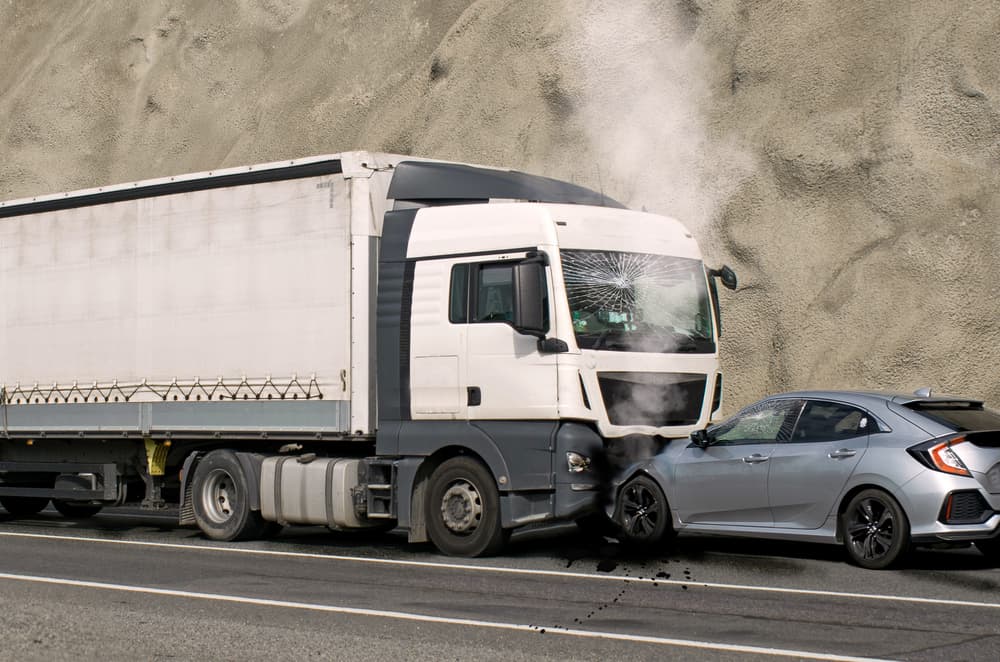
Economic damages cover measurable financial losses such as past and current medical bills, future medical costs including surgeries, rehabilitation, and assistive devices, lost wages during recovery, reduced earning capacity if you are unable to return to your prior occupation, and property damage to your vehicle.
Non-economic damages address the personal toll of your injuries, including pain and suffering, emotional distress, loss of enjoyment of life, and loss of consortium.
How Ohio's Comparative Negligence Rule Affects Your Recovery
Under Ohio Revised Code § 2315.33, Ohio follows a modified comparative negligence system with a 51 percent bar. Your compensation is reduced by your percentage of fault, and if your fault exceeds 50 percent, you recover nothing.
In rear-end truck crash cases, the defense may argue that you contributed to the collision by stopping suddenly or failing to signal. Strong medical documentation, accident reconstruction evidence, and ELD data from the truck all help your attorney counter those arguments and keep your assigned fault percentage low.
How O'Connor, Acciani & Levy Handles Severe Rear-End Truck Accident Cases in Cincinnati
Catastrophic injury claims from commercial truck crashes require an attorney who understands both the medical complexity of the injuries and the federal regulations that govern trucking operations. O'Connor, Acciani & Levy has represented injury victims in Cincinnati and throughout the Ohio and Northern Kentucky tri-state region for more than 27 years, and the firm's attorneys have helped recover tens of millions of dollars for clients harmed in truck collisions.
Building Claims Around Long-Term Injury Costs
The legal team at O'Connor, Acciani & Levy works with medical professionals to document the full scope of your injuries, including future surgeries, rehabilitation needs, and any permanent limitations on your ability to work or live independently. That thorough approach helps prevent a settlement that accounts for only your current bills while ignoring the long-term costs that serious truck accident injuries create.
No Upfront Cost to Get Started
O'Connor, Acciani & Levy handles rear-end truck accident injury cases on a contingency fee basis. You pay nothing unless the firm recovers compensation for you. The Cincinnati headquarters at 600 Vine St, Suite 1600, offers free case evaluations to local residents.
FAQs for Rear-End Truck Accident Injuries in Cincinnati, Ohio
Why are injuries from semi-truck rear-end collisions in Ohio more severe than car accident injuries?
The weight difference between a commercial truck (up to 80,000 pounds) and a passenger car (roughly 4,000 pounds) creates impact forces that standard vehicle safety features are not designed to absorb. That disparity results in more severe spinal injuries, traumatic brain injuries, and internal organ damage than a typical car-on-car rear-end crash produces.
What is an underride collision and why is it so dangerous?
An underride collision happens when a smaller vehicle slides beneath a truck's trailer during a crash, bypassing the car's crumple zones and striking the passenger compartment at roof or windshield height. These crashes frequently result in fatal or permanently disabling injuries because the vehicle's structural protections are rendered ineffective.
What types of compensation may I recover after a severe rear-end truck accident in Cincinnati?
Ohio law allows you to pursue economic damages such as medical expenses, lost wages, and reduced earning capacity, as well as non-economic damages such as pain and suffering, emotional distress, and loss of enjoyment of life. The value of your claim depends on the severity and permanence of your injuries.
How does Ohio's comparative negligence rule affect a rear-end truck accident claim?
Ohio follows a modified comparative negligence system under Ohio Revised Code § 2315.33. Your compensation is reduced by your percentage of fault, and if your fault exceeds 50 percent, you recover nothing. Insurance companies may argue that you contributed to the crash to lower their payout or eliminate it entirely.
How long do I have to file a rear-end truck accident lawsuit in Cincinnati?
Under Ohio Revised Code § 2305.10, you have two years from the date of the accident to file a personal injury lawsuit. However, trucking companies may destroy certain records after as little as six months, so consulting an attorney early helps preserve the evidence your claim depends on.
Get the Right Legal Help for Your Rear-End Truck Accident Injuries in Cincinnati, Ohio

The injuries you suffered in a rear-end truck collision on I-75, I-71, or any Cincinnati highway may affect your ability to work, care for your family, and live without pain for years to come. The trucking company's insurer is already working to minimize what it pays, and the longer you wait to act, the harder it becomes to gather the evidence needed to prove the full scope of what this crash took from you.
O'Connor, Acciani & Levy has the local presence in Cincinnati and the experience with catastrophic truck accident cases to pursue the full range of compensation Ohio law allows. Contact the firm for a free consultation and take the first step toward building a claim that reflects the true severity of your injuries.
