Truck drivers who drive while under the influence of alcohol, drugs, or certain medications put everyone on the road in danger. Impairment slows reaction time, blurs judgment, and reduces coordination, making it easy for a truck driver to miss traffic signals, drift between lanes, or lose control of a massive commercial vehicle. These reckless actions often lead to devastating crashes, including rear-end collisions, jackknifes, and head-on impacts that cause severe or fatal injuries.
If you are a victim of such an accident, the experienced Florence truck accident lawyers at O’Connor, Acciani & Levy can pursue the compensation you deserve. We will investigate the cause of the crash, gather evidence of the driver’s impairment, and hold both the driver and the trucking company accountable for your injuries, losses, and pain.
For a free case evaluation and legal consultation, please call our office headquarters at (513) 224-5461 or contact us online right away.
Key Takeaways: Trucking Accidents Caused by Impaired Drivers
• Impaired truck driving is one of the most dangerous causes of roadway accidents. Alcohol, drugs, or even certain prescription medications can severely limit a truck driver’s ability to think clearly, react quickly, and maintain control of a commercial vehicle.
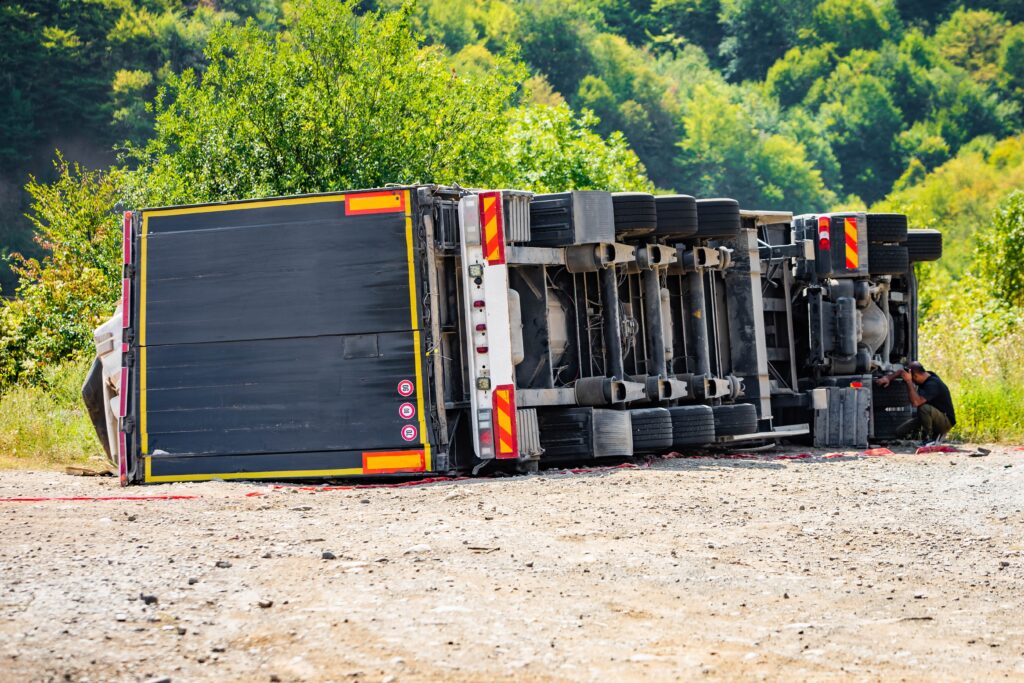
• Common accident types include rear-end collisions, head-on crashes, jackknife and rollover accidents, and wide-turn or sideswipe collisions—all of which can cause catastrophic or fatal injuries to other motorists.
• Victims often suffer traumatic brain injuries, spinal cord damage, fractures, internal injuries, and severe emotional trauma that may require long-term medical care and rehabilitation.
• Trucking companies can also be held liable if they negligently hired, trained, or supervised an impaired driver, or failed to enforce safety and drug-testing regulations.
• Recoverable compensation may include medical expenses, lost income, pain and suffering, and, in cases of malice, punitive damages meant to punish the wrongdoer.
• Our experienced truck accident lawyers can handle every aspect of your case—from investigating the crash and gathering evidence of impairment to negotiating with insurers and pursuing full compensation through settlement or trial. We work to secure the justice and recovery you deserve.
Types of Accidents that Impaired Truck Drivers Cause
Operating a commercial truck requires precision, alertness, and split-second decision-making. Any degree of impairment undermines these skills, turning a massive vehicle into a deadly weapon. Even one drink, prescription drug, or recreational substance can be enough to cause a devastating trucking accident.
When a truck driver operates an 18-wheeler or other commercial vehicle under the influence of alcohol or drugs, the risk of catastrophic accidents increases dramatically. Impairment dulls the senses, slows reaction time, and clouds judgment—factors that are particularly dangerous behind the wheel of a vehicle weighing tens of thousands of pounds. The resulting collisions often leave victims with life-altering injuries and significant property damage.
Rear-End Collisions
Impaired truck drivers often fail to recognize slowing or stopped traffic ahead. Because alcohol and drugs delay reaction time, an impaired driver may not brake in time, causing a violent rear-end crash. These accidents are especially severe when a large commercial truck slams into a smaller passenger vehicle.
Head-On Collisions
Loss of coordination and perception from impairment can cause a truck driver to drift across the center line into oncoming traffic. Head-on collisions involving large trucks are among the deadliest types of crashes due to the massive force of impact.
Jackknife and Rollover Accidents
Impairment also affects a truck driver’s ability to maintain control during turns, lane changes, or emergency maneuvers. When a driver overcorrects or brakes suddenly, the trailer can swing out to the side—causing a jackknife—or overturn completely in a rollover. These crashes often result in multi-vehicle pileups.
Sideswipe and Wide-Turn Collisions
Substances like alcohol, opioids, or stimulants can blur vision and disrupt depth perception. As a result, impaired truck drivers may misjudge distances while merging or turning, sideswiping vehicles in adjacent lanes or taking excessively wide turns that trap nearby motorists.
Can a Trucking Company Be Responsible When an Impaired Truck Driver Causes an Accident?
When an impaired truck driver causes a serious accident, the driver may not be the only party legally responsible. Trucking companies have a duty to ensure that their employees operate commercial vehicles safely, follow federal and state regulations, and remain sober behind the wheel. When they fail to meet those obligations, the company itself may share in the liability for resulting injuries and damages.
Negligent Hiring and Retention
A trucking company can be held responsible if it hires a driver with a known history of substance abuse, DUI convictions, or reckless driving. Employers are expected to perform thorough background checks, verify driving records, and ensure that the driver meets all safety qualifications. If a company ignores warning signs or continues employing a driver who repeatedly violates drug or alcohol policies, it may be found negligent in hiring or retention.
Negligent Supervision and Training
Trucking companies must properly train and closely monitor their drivers to ensure compliance with safety standards. If they fail to conduct regular drug and alcohol testing, overlook erratic driving behavior, or neglect to enforce safety protocols, they can be held liable for an impaired driving crash. Supervisors who turn a blind eye to substance use or fail to remove unfit drivers from the road expose their companies to significant legal consequences.
Vicarious Liability
Even if a company was not directly negligent, it may still be held liable under the principle of vicarious liability. When a truck driver is acting within the scope of employment—such as making deliveries or driving an assigned route—the employer can be legally responsible for the driver’s actions, including those involving impairment.
Legally Proving an Impaired Truck Driving Accident Case
Proving that a truck driver was impaired at the time of a crash requires strong legal evidence and a clear connection between the driver’s condition and the resulting injuries. Because trucking companies and their insurers often attempt to deny or minimize fault, victims must rely on detailed investigations and expert testimony to establish liability.
Establishing the Driver’s Impairment
The first step in proving an impaired truck driving accident case is demonstrating that the driver was under the influence of alcohol, illegal drugs, or certain prescription medications. Evidence may include results from breath, blood, or urine tests; field sobriety test results; police reports; and eyewitness accounts describing erratic driving behavior before the collision. In some cases, data from the truck’s electronic logging device or dash camera footage may also show signs of impairment, such as delayed reactions or swerving.
Linking Impairment to the Accident
It is not enough to prove that the driver was impaired—the impairment must be shown to have directly caused or contributed to the crash. Accident reconstruction experts and toxicologists often play a crucial role in establishing this connection by analyzing how the driver’s slowed reflexes, poor judgment, or blurred perception led to the collision.
Holding the Trucking Company Accountable
To recover full compensation, it is often necessary to investigate the trucking company’s role. If the company failed to conduct proper drug and alcohol testing, ignored prior violations, or allowed the driver to remain on the road while impaired, it may share in the legal responsibility.
Common Injuries in Impaired Truck Driving Accidents
Collisions caused by impaired truck drivers are among the most devastating crashes on the road. The sheer size and force of a commercial truck, combined with the driver’s delayed reactions and loss of control, can leave victims with catastrophic and often permanent injuries. These physical and emotional wounds can alter every aspect of a victim’s life and require years of treatment and rehabilitation.
- Traumatic Brain Injuries – Head trauma is one of the most common and severe consequences of an impaired truck driving accident. Victims may suffer concussions, brain bleeding, or long-term cognitive damage. Even a moderate brain injury can lead to memory loss, difficulty concentrating, or mood disorders that interfere with daily life and work.
- Spinal Cord and Back Injuries – The violent impact of a truck crash can fracture vertebrae, damage nerves, or sever the spinal cord entirely. Victims often experience chronic pain, limited mobility, or complete paralysis. These injuries usually require intensive medical care, surgeries, and long-term physical therapy.
- Broken Bones and Internal Damage – Truck crashes frequently result in multiple fractures, crushed limbs, and internal organ injuries. The force of impact can rupture the lungs, liver, or spleen, causing life-threatening internal bleeding. Some victims require amputation of severely damaged limbs.
- Whiplash and Soft Tissue Injuries – Even in less-severe truck collisions, victims can suffer painful neck, shoulder, and back strain. These injuries may not appear immediately but can develop into chronic conditions that restrict movement and cause ongoing discomfort.
- Emotional and Psychological Trauma – Survivors often face post-traumatic stress disorder, anxiety, or depression after an impaired truck driving accident. The emotional impact can be just as debilitating as the physical injuries, affecting relationships, confidence, and quality of life.
Types of Recoverable Compensation in an Impaired Truck Driving Accident Case
When a truck driver operates their vehicle while under the influence and causes an accident, victims often face severe physical, emotional, and financial hardships. The law allows injured individuals to pursue compensation for these losses, aiming to restore their quality of life and hold negligent parties accountable for their actions. The types of compensation available depend on the extent of the injuries, the evidence presented, and the long-term effects of the crash.
Economic Damages
Economic damages are meant to cover the measurable financial losses a victim suffers because of the accident. These include compensation for medical expenses, such as emergency care, hospitalization, surgeries, medication, and ongoing rehabilitation. Victims may also recover for lost income if they are unable to work during recovery, as well as for diminished earning capacity if their injuries permanently affect their ability to perform their job. Property damage to a vehicle or personal belongings is also typically included in this category.
Non-Economic Damages
Not all losses are financial. Victims of impaired truck driving accidents often endure significant pain and suffering, both physically and emotionally. Non-economic damages account for this suffering, compensating for chronic pain, emotional distress, anxiety, depression, and the overall loss of enjoyment of life. In severe cases, where a victim’s injuries cause permanent disability or disfigurement, these damages can form a substantial portion of the overall claim.
Punitive Damages
When a truck driver’s impairment shows extreme malice, the court may award punitive damages. These are not meant to compensate the victim directly but to punish the wrongdoer and deter similar conduct in the future. Because impaired driving involves conscious choices that endanger others, punitive damages are often a significant factor in such cases.
FAQs: Impaired Truck Driving Accident Cases
What makes impaired truck driving accidents so dangerous?
Commercial trucks weigh tens of thousands of pounds and require precision to operate safely. When a driver is under the influence of alcohol or drugs, reaction time, coordination, and judgment are severely impaired. It increases the risk of high-speed crashes, jackknife accidents, and devastating multi-vehicle collisions.
Who can be held liable for an impaired truck driving accident?
In many cases, both the truck driver and the trucking company can be held responsible. The driver is directly liable for choosing to drive under the influence, while the company may share liability if it failed to conduct proper background checks, enforce drug testing, or remove unsafe drivers from service.
What types of compensation can I recover?
Victims may seek compensation for medical expenses, lost income, pain and suffering, and emotional distress. Punitive damages may also be available to punish the wrongdoing and discourage similar behavior.
How can our lawyers help you?
The experienced truck accident attorneys at O’Connor, Acciani & Levy can investigate the crash, collect key evidence of impairment, negotiate with insurers, and pursue full compensation through settlement or trial. We handle every aspect of your case so you can focus on recovery and rebuilding your life.
Talk with an Experienced Truck Accident Lawyer Today
At O’Connor, Acciani & Levy, we will promptly investigate your accident circumstances, gather evidence, and take the proper legal steps to maximize the compensation you recover.
For a free case evaluation and legal consultation with a knowledgeable Florence personal injury lawyer, please call our office at (513) 224-5461 or contact us online.
